Leave Your Message
The global shift towards sustainable and health-conscious dietary habits has catalyzed an unprecedented boom in the plant-based protein beverage market. Consumers are increasingly turning to alternatives derived from oats, peas, almonds, soy, and hemp. However, the commercialization of these beverages faces a critical industrial bottleneck: lipid oxidation and flavor degradation. Unlike traditional dairy, plant proteins are highly susceptible to oxidation due to their specific amino acid profiles and the presence of unsaturated fatty acids in the raw materials.
In the industrial manufacturing process, exposure to heat (during UHT processing), light, and oxygen initiates a chain reaction of free radical formation. This results in the development of off-flavors (often described as "beany," "cardboard," or "rancid"), color deterioration, and a significant reduction in nutritional value. Consequently, the application of targeted food antioxidants for plant-based protein beverages has transitioned from an optional additive to an absolute industrial necessity to guarantee shelf-life stability and consumer acceptance.
Historically, the food industry relied heavily on synthetic antioxidants such as BHA (Butylated Hydroxyanisole), BHT (Butylated Hydroxytoluene), and TBHQ. However, modern consumer scrutiny and stringent regulatory frameworks (such as EFSA and FDA guidelines) are driving a massive industrial pivot towards clean-label, natural antioxidants.
Today's formulations heavily feature tocopherols (Vitamin E), rosemary extracts (carnosic acid), green tea extracts (catechins), and acerola cherry extracts (natural Vitamin C). The challenge for R&D teams lies in the fact that natural antioxidants often carry their own inherent flavors or colors. Therefore, the development of composite antioxidant systems that provide synergistic protection without altering the sensory profile of the delicate plant milk base represents the forefront of food science innovation.

Nanchang Tellcan food Science Co., Ltd (hereinafter referred to as Tellcan Food), founded in 2001, is an excellent practitioner of compound food additives and food essence, specializing in the research and development, production and sales of food additives, and the research and development of food technology and food technology.
Various types of compound food additives, edible essence and spices produced by Tellcan Food can be used in many fields such as food, beverage and dairy products. Our expertise in preventing oxidation in plant-based proteins ensures that your beverages maintain their pristine flavor, nutritional integrity, and visual appeal throughout their extended shelf life.
Read moreOat milk production involves enzymatic hydrolysis, which exposes oat lipids to oxidation, leading to a bitter, rancid taste. The application of highly specialized food antioxidants during the milling and liquefaction stages prevents the formation of hexanal and other volatile oxidative markers. By utilizing a composite blend of water-soluble and lipid-soluble antioxidants, manufacturers can maintain the natural sweetness and creamy mouthfeel of oat beverages for up to 12 months under ambient storage conditions.
Pea protein is celebrated for its high protein content and hypoallergenic properties, but it notoriously suffers from strong "beany" and "earthy" off-notes. These flavors are direct byproducts of lipoxygenase (LOX) activity and lipid oxidation. Advanced antioxidant and flavor enhancement systems act dually: they neutralize free radicals to halt further degradation and utilize masking technologies to suppress existing undesirable flavor compounds, resulting in a clean, neutral base suitable for vanilla, chocolate, or fruit flavorings.
Almond, macadamia, and walnut milks contain exceptionally high levels of polyunsaturated fatty acids (PUFAs). While nutritionally beneficial, PUFAs are highly reactive to oxygen. In these matrices, the integration of synergistic antioxidant blends—often incorporating natural tocopherols and rosemary extract—creates a protective shield around the emulsified fat droplets. This prevents emulsion breakdown, phase separation, and the development of rancidity, ensuring the beverage retains its premium, fresh-roasted aromatic profile.
Driven by AI and advanced food science, our research facilities are dedicated to pioneering the next generation of food antioxidants for plant-based protein beverages.


The future of food antioxidants for plant-based protein beverages is being rapidly reshaped by Artificial Intelligence. Traditional R&D relied on exhaustive trial-and-error to find the perfect synergistic ratio of antioxidants. Today, machine learning algorithms analyze vast datasets of molecular structures, oxidation kinetics, and sensory evaluations to predict the most effective antioxidant blends. AI models can simulate how specific plant proteins (like soy globulins or pea vicilins) interact with various natural extracts under specific thermal processing conditions, drastically reducing time-to-market for new beverage innovations.
One of the most significant technological leaps is the use of nano-encapsulation. Natural antioxidants are often sensitive to heat and light themselves, losing efficacy before they even reach the consumer. By encapsulating these active compounds within plant-derived lipid or carbohydrate matrices, manufacturers can achieve controlled release. This ensures that the antioxidant protection is activated exactly when and where it is needed—protecting the beverage during rigorous UHT pasteurization and continuing to safeguard the product throughout its entire shelf life without impacting the liquid's viscosity or mouthfeel.
The industry is also moving towards circular economy models. Next-generation antioxidants are being extracted from agricultural byproducts, such as olive mill wastewater, grape pomace, and coffee husks. These upcycled polyphenols provide robust protection against lipid oxidation in plant milks while significantly lowering the carbon footprint of the final beverage, aligning perfectly with the eco-conscious mindset of the target consumer demographic.
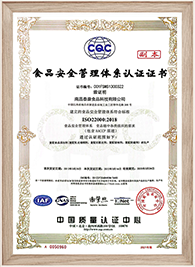
The company has implemented and maintains the HACCP 22000 Food Safety Management System, ensuring reliable products and services. To date, Tellcan has resolved technical challenges for thousands of domestic enterprises and earned prestigious recognitions, including:
 Council Member of China Food Additives Production and Application Industry AssociationStanding Council Member of Jiangxi Food Additives AssociationMember of China Dairy Products Industry AssociationMember of China Bakery & Confectionery Supplementary Materials Industry AssociationMember of China National Federation of Industry & Commerce Bakery AssociationPremium Products & Global Sourcing