
Leave Your Message
 Food Flavor Enhancement Systems
Discover our cutting-edge food additives designed specifically for maintaining and enhancing food texture stability across various industrial applications.


In the complex and ever-evolving landscape of food science, the concept of texture is paramount. Food additives for food texture stability are the invisible architects behind the mouthfeel, structural integrity, and sensory appeal of the products we consume daily. Texture is not merely a secondary attribute; it is often the primary determinant of consumer acceptance. Whether it is the satisfying crunch of a snack, the creamy melt of premium ice cream, or the tender bite of a high-quality baked good, stability in these physical characteristics relies heavily on precisely engineered food additives.
The commercial and industrial status of texture-modifying food additives has experienced exponential growth over the past decade. Globally, the food hydrocolloids and emulsifiers market—key components in texture stability—is valued in the tens of billions of dollars. This surge is driven by several intersecting industrial trends. First, the rapid expansion of the processed and convenience food sectors demands products that can withstand harsh processing conditions, including ultra-high temperature (UHT) pasteurization, high-pressure processing, and extended freezing cycles. Without robust stabilizers, these products would suffer from syneresis (weeping), phase separation, or structural collapse.
Furthermore, the modern supply chain requires extended shelf life without compromising quality. Food additives for food texture stability act as a protective matrix, preventing starch retrogradation in bakery products and inhibiting ice crystal growth in frozen desserts. Industrially, manufacturers are transitioning towards highly functional, cost-effective compound systems. Instead of relying on single ingredients, modern food technologists utilize synergistic blends of gums (such as xanthan, guar, and locust bean gum), emulsifiers (like mono- and diglycerides), and modified starches to achieve unparalleled rheological control. This shift towards compound systems optimizes the cost-in-use ratio while delivering superior performance under diverse manufacturing environments.

Nanchang Tellcan food Science Co., Ltd (hereinafter referred to as Tellcan Food), founded in 2001, is an excellent practitioner of compound food additives and food essence, specializing in the research and development, production and sales of food additives, and the research and development of food technology and food technology. Various types of compound food additives, edible essence and spices produced by Tellcan Food can be used in many fields such as food, beverage and dairy products.
Read moreUnderstanding how food additives for food texture stability function requires a deep dive into specific industrial applications. Different food matrices present unique rheological challenges that require tailored technological solutions.
In the dairy and rapidly growing plant-based milk sectors, texture stability is critical. Plant proteins often lack the natural emulsification properties of milk fat, leading to a gritty mouthfeel and rapid phase separation. By introducing sophisticated food additives such as gellan gum or carrageenan, manufacturers can create a fluid gel network. This network effectively suspends insoluble particles (like cocoa or oat fibers) without significantly increasing the perceived viscosity, delivering a creamy, smooth texture that mimics traditional dairy.
The staling of bread and baked goods is primarily caused by starch retrogradation and moisture migration. Food additives for food texture stability, particularly emulsifiers like Sodium Stearoyl Lactylate (SSL) and Diacetyl Tartaric Ester of Monoglycerides (DATEM), complex with amylose during baking. This interaction delays the crystallization of starch, maintaining a soft, resilient crumb structure over an extended shelf life. In confectionery, hydrocolloids control sugar crystallization, ensuring gummies maintain their chewiness and preventing chocolates from developing fat bloom.
In processed meats, achieving the perfect sliceability, juiciness, and bite is a complex rheological task. Phosphates and alginates are essential food additives used to enhance the water-binding capacity of meat proteins. By stabilizing the meat emulsion, these additives prevent fat capping and water purge during cooking and storage. This not only improves the sensory texture but also significantly increases the industrial yield, making the production process more economically viable and sustainable.
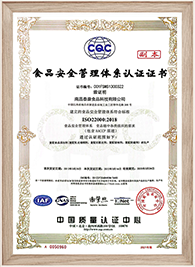
The company has implemented and maintains the HACCP 22000 Food Safety Management System, ensuring reliable products and services. To date, Tellcan has resolved technical challenges for thousands of domestic enterprises and earned prestigious recognitions, including:
 Council Member of China Food Additives Production and Application Industry AssociationStanding Council Member of Jiangxi Food Additives AssociationMember of China Dairy Products Industry AssociationMember of China Bakery & Confectionery Supplementary Materials Industry AssociationMember of China National Federation of Industry & Commerce Bakery AssociationPremium Products & Global Sourcing



The future of food additives for food texture stability is being rapidly reshaped by the integration of Artificial Intelligence (AI) and advanced predictive technologies. Historically, formulating a stable food matrix was a process of trial and error, requiring extensive laboratory testing to observe how different gums, starches, and emulsifiers interacted over time. Today, the industry is witnessing a paradigm shift towards smart formulation.
By leveraging machine learning algorithms and vast datasets of rheological properties, AI can now predict the textural outcomes of complex additive blends with unprecedented accuracy. These AI-driven predictive models analyze variables such as pH, temperature fluctuations, shear stress during processing, and targeted shelf life. The technology allows food scientists to simulate millions of formulation iterations in a digital twin environment before a single physical prototype is created. This not only accelerates the R&D cycle but also enables the discovery of novel, synergistic interactions between natural food additives that human researchers might overlook.
Moreover, as consumer demand shifts aggressively towards "clean label" products, the industry faces the challenge of replacing synthetic stabilizers with natural alternatives without compromising texture stability. AI technology is instrumental in this transition, mapping the molecular structures of plant-based hydrocolloids derived from precision fermentation or upcycled food waste. These high-tech methodologies ensure that the next generation of food additives will provide robust structural support, superior mouthfeel, and uncompromising texture stability, all while meeting the stringent sustainability and health criteria of the modern consumer.
Explore our comprehensive range of specialized functional components engineered for ultimate texture control.


TELLCAN SCIENCE


